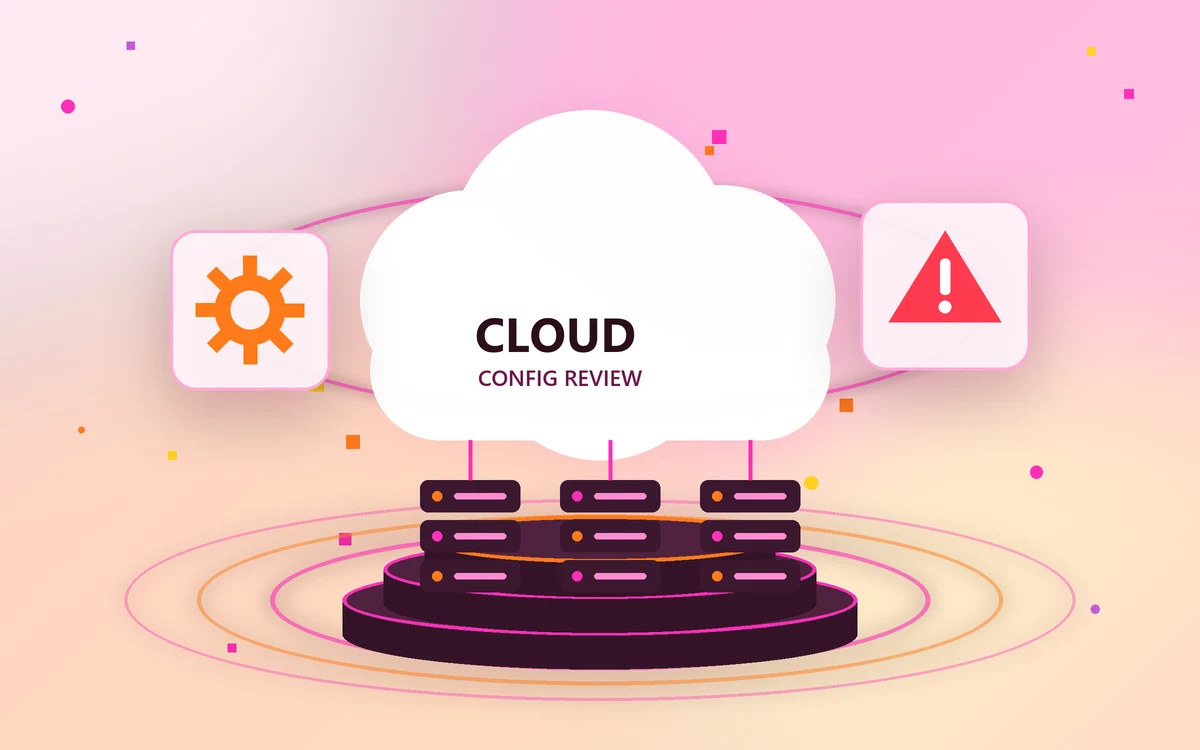
Major cloud providers invest heavily in the security of the cloud. Security in the cloud — how you configure identities, storage, networks and logging — remains your responsibility under the shared responsibility model. Most cloud security incidents trace back not to a flaw in the platform but to a setting that was left open.
The following gaps come up repeatedly in cloud configuration reviews, regardless of provider.
Identity and access
- Overly broad permissions. Roles granted wildcard access "to get things working" and never narrowed.
- Long-lived access keys. Static keys embedded in scripts, CI pipelines or developer laptops, sometimes years old.
- Root or owner accounts used day to day, or without multi-factor authentication.
- No regular access review, leaving former staff and unused service accounts active.
Storage and data
- Storage buckets or blobs that allow public read access unintentionally.
- Database snapshots or backups shared more widely than intended.
- Encryption at rest not enabled, or keys managed without clear ownership.
Network exposure
- Security groups allowing administrative ports such as SSH or RDP from anywhere on the internet.
- Management interfaces and databases with public IP addresses that do not need them.
- Flat networks where development and production can reach each other freely.
Visibility
- Audit logging not enabled in every account, region or subscription.
- Logs retained for too short a period to support an investigation.
- Alerts configured but routed to a mailbox nobody monitors.
How to reduce the risk
Start with an inventory. You cannot secure accounts, subscriptions and projects you do not know about.
Measure against a recognised benchmark. Provider security baselines and independent benchmarks offer a consistent checklist and make progress measurable.
Use guardrails, not just reviews. Organisation-level policies that prevent public storage or unencrypted resources stop misconfigurations before they happen.
Review after change. Cloud environments change daily. Pair periodic assessments with automated configuration monitoring.
A cloud security assessment combines configuration review against benchmarks with authorised testing of exposed services, producing a prioritised list of fixes your engineers can act on.